The Constitution is remarkably nonspecific on most things, and deliberately so. John Marshall famously wrote that the document marks the “great outlines” and designates the “important objects” only. It is a Constitution, not a legal code.
But in one place the drafters of the Constitution wrote word for word what governance would look like under the newly constituted United States: the president’s oath of office.
“I do solemnly swear (or affirm) that I will faithfully execute the Office of President of the United States, and will to the best of my Ability preserve, protect and defend the Constitution of the United States.”
Nothing else in the Constitution sits inside quotation marks. The oath’s significance nearly jumps off the page. It indicates just how important the Founders believed oaths to be.
Oaths are nearly an anthropological constant in human societies. They predated organized religion, magical utterances only later incorporated into systems of belief centered on divine beings and eventually a singular God. They were, in effect, self-curses: in an oath, wrote John Milton, “we call God to witness the truth of what we say, with a curse upon ourselves, either implied or expressed, should it prove false.”
If you’ve ever misread the common closing phrase “so help me God” as being some sort of prayer that God will help us fulfill the promise just made, take note: It’s not. What it really means, in the words of one of the most read moral philosophy textbooks of the 18th century, is “upon condition of my speaking the truth, or performing this promise, and not otherwise, may God help me” — that is, help spare me from eternal torment.
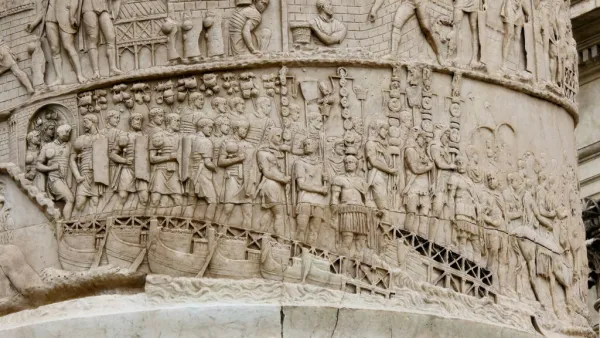
Oaths were everywhere in the ancient world, a fact that our own Rome-obsessed founding generation did not miss. They read Cicero’s influential observations, “On Duties,” where whole chapters are devoted to oaths. They knew that, in both Greece and Rome, people who died by lightning strike were denied a regular burial because that was Zeus’s punishment for perjurers.
Readers of the Baron de Montesquieu’s “The Spirit of Laws” — they cited no book but the Bible more often than his — learned that “nothing bound [the Romans] more strongly to the laws” than did an oath, for which they would do more “than they ever would have performed for the thirst for glory or for the love of their country.”
This may well have been enough for the American Founders. But a few things happened across the intervening centuries to make oaths seem even more indispensable.
In the post-Roman world, as noblemen and kings in Europe and the Near East fused religion with political and military power, they found that oaths of fealty could establish legitimacy. Made solemnly and sincerely, a promise of loyalty became internalized in a way that outlasted the moment when an official or an army was there to demand it.
Henry VIII saw that potential as none had before. In the 1530s, when he expanded his power by separating England’s church fully from the pope in Rome and placing himself at its head, Henry demanded oaths of every man (a massive administrative task), and more targeted ones regarding his role as supreme head of the church from all clergy and political officials.
One consequence was an explosion of oaths in English law and society. Those resisting Henry’s Reformation drafted and demanded oaths in response. From this time forward, England never knew a serious conflict that did not have its oaths and counter-oaths.
The American Revolution was no exception. Allegiances appeared unknowable and, where known, might change overnight as battle lines shifted. George Washington sought oaths of loyalty to address this problem. He wrote to John Hancock, president of Congress, in February 1777, to “strongly recommend every State to fix upon some Oath or Affirmation of Allegiance to be tendered to all the Inhabitants without exception, and to out law those that refuse it.” Should they not, “we lose a considerable Cement to our own Force, and give the enemy an opportunity to make the first tender of the oath of allegiance to the King.”
Oaths were regarded as essential to victory. John Adams wrote to Gen. Nathanael Greene in June 1777 that to improve morale and discipline in the army, our chaplains “ought to make the Solemn Nature and the Sacred obligation of Oaths the favourite Subject of their Sermons to the Soldiery.”
The Founding generation believed that oaths have consequences, binding those who took them to a course of action. And so, in the summer of 1787 delegates to the Constitutional Convention knew from the outset that whatever they came up with would include oaths. The famous “Virginia Plan,” a 19-point checklist offered up as a starting point for debate, proposed that all governmental powers within the states “be bound by Oath, to support the articles of Union.”
The final text mentions oaths three times. The Bill of Rights would add one more mention, the 14th Amendment yet another. Article VI of the Constitution empowers Congress to draft an oath for every single officeholder in the nation — federal, state and local — which they did immediately. The first thing signed into law by Washington was the Oaths Act. Every elected or appointed government official in a state or federal role would henceforth “solemnly swear or affirm (as the case may be) that I will support the Constitution of the United States.”
That oath was hugely important. Though it was rewritten by Congress in the wake of the Civil War, as Americans grappled with allowing former Confederates into federal service at all, that oath of office is still with us, for public servants low and high. I took it when I began work at the Library of Congress, incoming Vice President JD Vance will, too, and millions more have spoken the same words.
But only the president takes an oath written into the Constitution. A first draft had the incoming president swear simply to “faithfully execute the office of President of the United States of America.” The last two words disappeared as the oath took shape, with James Madison and George Mason adding “and will to the best of my judgment and power, preserve, protect and defend the Constitution of the United States.”
It sat that way until the closing days of the Convention. Washington’s copy, marked up as it received its final changes, shows him scratching out the words “judgment and power” and writing in the word “Abilities” (the final version actually used the word “ability”), a change the delegates must have made for concision, and the text was complete. He would be the first to speak those words.
There was not complete consensus. James Wilson wasn’t sure the president’s oath needed to be there at all. He “was never fond of oaths” generally, noted Madison, “considering them as a left handed security only.” But if the president should take an oath, then surely “the general provision for oaths of office, in a subsequent place,” that is, Article VI, should be enough, he argued.
The convention disagreed. The president’s oath would become a fixture in the text itself. Barring formal amendment of the Constitution, it will always remain the same.
In short, the framers believed that oaths mattered, and they were the only ones who could write it. No one wanted an all-powerful executive, but the idea of making the president “the mere creature of the Legislature,” in the words of Mason, was a “violation of the fundamental principle of good government.” So Congress could not write the president’s oath — this one or any other. As Thomas Jefferson would write as he was preparing to take the oath in 1801, “it may be questionable whether the legislature can require any new oath from the president.” They have never tried.
Washington first took the oath on a balcony in New York in 1789, to a “Long Live George Washington” from Chancellor Robert Livingston and general huzzahs. He did not add “so help me God” — Chester A. Arthur was the first to do that.
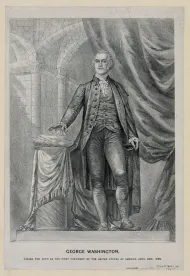
George Washington, taking the oath as the first president of the United States of America.
(E.E. Eckstein/Library of Congress, Prints and Photographs Division)
The beginning of Washington’s second term made the oath what it is today. Initially unsure whether it should even be taken in public, he was eventually persuaded by his Cabinet to do so. In the Senate chamber, he stood to give what we now call his Second Inaugural Address. It will forever be the shortest one. In four sentences, he did little more than explain to Congress why he had chosen to take the oath “in your presence.”
Should anyone find that he had “in any instance, violated, willingly or knowingly, the injunction” of the oath, Washington said, they should hold him accountable. “Constitutional punishment” (impeachment) was, he said, one consequence. But he hoped, too, to be “be subject to the upbraidings of all who are now witnesses of the present solemn ceremony.”
Washington understood why the president’s oath was set aside for that singular office. In the words of Supreme Court Justice Joseph Story a half-century later, the oath “results from the plain right of society to require some guaranty” that an officeholder “will be conscientious in the discharge of his duty.”
Nearly a quarter of a millennium later, some surely have doubts about the binding power of a spoken oath. But to those who drafted the Constitution, the oath seemed to be history’s best attempt at trust and accountability. Enshrined in the Constitution for reasons that mattered deeply to the Founding generation, it will always be there.
Original article: The Washington Post Opinion: This is why we have a presidential oath