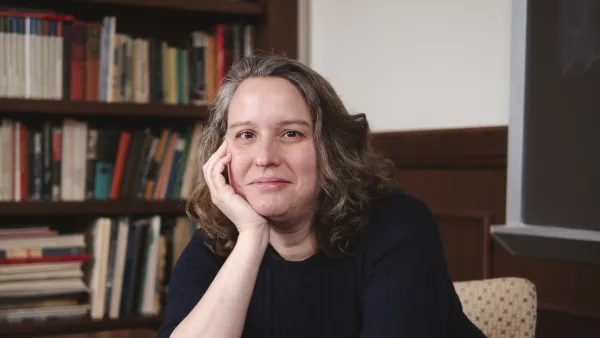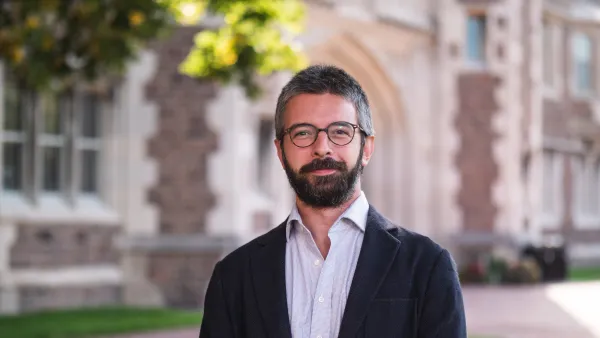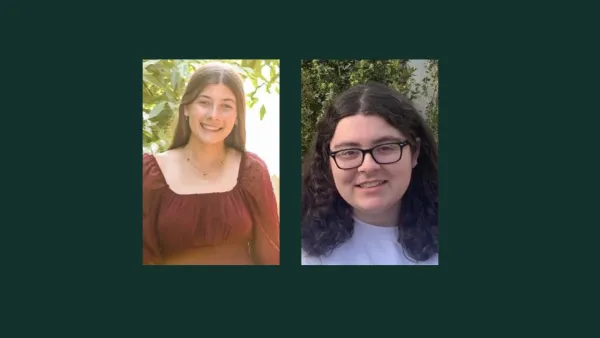
Meet Nicole Spangler and MJ Jones, two of the 2025 Living History Scholars. They reflect on their experiences in the program, the lessons they took away, and their tips for future applicants.

|

|
| Nicole Spangler | MJ Jones |
| Spring 2027 | May 2026 |
| 19th Century American History | Indigenous American history and Louisiana Purchase Exposition history |
| View Nicole's Story-Map | View MJ’s documentary on YouTube |
Q&A
What was your favorite part about being a Living History Scholar?
Spangler: "My favorite part of being a Living History Scholar was being given the resources to expand my research scope. I had the ability to access physical archives that would not have otherwise been available, and I was also able to visit sites and interview people whom I did not have access to just at WashU."
Jones: "I really appreciated the chance to do more formal, self-guided research prior to my senior year. The process of writing a senior thesis has been much less frightening since I am more familiar with the process of research. I also feel much more confident when I approach hurdles to my research, since I have experience navigating issues that came up while conducting research for the Living History Scholar project."
How did participating in this program shape your understanding of history or the way you approach research?
Spangler: "This program has really altered the way I approach my research, as it has introduced a wider variety of types of documentation and preservation of history. I had never worked with oral history or personal memories before, and it gave me a new perspective on how history is perceived. The contradictions and differing historical accounts I found across mediums and records also shaped the way I research, as it forced me to be more analytical about what I found, rather than simply documenting records."
Jones: "The Living History program changed how I go about research and demystified the process. I had built it up in my head that interviewing people about their family history would be difficult, but I was really moved by how welcoming and kind everyone I interviewed were and how much they were willing to share with me."
What was the most challenging aspect of completing your project, and what did you learn from it?
Spangler: "The most challenging part of the project was synthesizing all the information I had received. I encountered more perspectives and opinions than I had anticipated, and I had to rethink what I expected my outcome to look like. Additionally, the number of documents and information I had was slightly overwhelming at times, and I had to be selective to best present my findings."
Jones: "The last week was definitely the most challenging! I produced a short (16 minute) documentary and the last two or three days of editing were pretty grueling. The obvious takeaway is that I will never anticipate that something will be fast or easy if I have not done it before -- essentially, that I will budget my time better."
What tips or advice would you give students who are considering applying for this program?
Spangler: "I would advise students to pick a topic they are truly fascinated by, as it will make the difficult parts of the program feel like a challenge rather than an obstacle. Also, to take advantage of the unique opportunities the program gives you, and to step out of your comfort zone while researching, whether this is interviews or traveling to a different archive, as it will make you a better historian and give you records that you can't find elsewhere."
Jones: "Do it! I started the process to submit a proposal pretty late and submitted it right at the deadline, since I got the idea for my research from a class I was taking in the fall. Genuinely, the Living History program is my favorite thing I have done in college so far. It has taught me more about research and working with other people than any class or other research project."